
If you’re thinking about enlarging a window, shrinking an opening, or turning a window into French doors, this is the moment to pause and check first. These are structural alterations to openings, not routine window work, and they sit in a higher-risk category for approvals, costs, and timescales.
What follows is a practical guide to why questions about applying for planning permission when changing window size come up so often, when an application is usually unavoidable, and how to keep your project moving without expensive missteps.
Why altering openings almost always triggers control
Can you increase the window size without planning permission? Even when the end result looks “simple”, changing an opening typically changes the external appearance of a building. That’s the core reason planning control gets involved more than people expect.
Here’s the clearest way to think about it:
- Replacing within an existing opening may fall under permitted development in some householder situations.
- Changing the size or position of the opening is a different thing entirely. You’re altering the façade and often the structure, which is where planning and building control become relevant.
Window-to-door conversions explained
A window-to-door conversion (including French doors) usually changes:
- the shape of the opening,
- the proportions of the elevation,
- and the way the property reads from the street.
That’s why changing a window to a door planning permission is so commonly needed, particularly on a front elevation or anywhere highly visible.
Here are the key “why” factors councils look at, even when the design is tasteful:
- Does it disrupt the rhythm of a terrace?
- Does it change a consistent building line or pattern of openings?
- Does it introduce a new access point with knock-on impacts (boundaries, privacy, or overlooking)?
- Is it on a prominent elevation (front/corner)?
In other words, changing a window to a door planning permission isn’t about whether the door is nice – it’s about how the alteration affects the overall character of the building and street.
Expert insight (Nathan, Wandsworth Sash Windows)
As Wandsworth Sash Windows Director Nathan puts it, this type of change will almost always require planning permission because you are changing the look of a building from the outside. Potentially, a change like this is not within permitted development rights. If you are in a flat, then planning approval from your local council will always be required.
That “flat vs house” point is one of the biggest causes of confusion. Even where a house might have some permitted development flexibility, flats/maisonettes are a different planning landscape – and homeowners often only discover that once they’ve already started pricing the build.
Conservation-area and flat implications
Two situations raise the stakes quickly:
- Conservation areas – because visible alterations are judged against the area’s character.
- Flats/maisonettes – because permitted development rights are more limited, and approvals are commonly needed.
This article focuses on changing openings (not replacement rules), but if your home is in a conservation area and you want the wider window-specific context – in which case, use our guide to replacing your windows in a conservation area.
Planning permission vs building regs (and where people get caught out)
Planning permission and building regulations aren’t the same thing, and the order matters. Planning permission is something you normally request before you start work; it is the approval to carry out the works. Building regulations are something that is organised during and after the works to ensure they have been done correctly.
Building regulations become especially relevant when you’re changing openings because the work can affect:
- structure (lintels, load paths, stability),
- fire safety and escape routes,
- ventilation,
- and distances to services (including flues).
It is important to think about the building regulations which become relevant if you are considering this type of change, such as fire egress and proximity to boiler flues.
When we fit a new window or door where structural changes have been made, then it is not possible for us to provide a FENSA certificate; sign-off in this situation must be done by building control, which is a separate, additional cost. This is because FENSA only applies in simple replacement situations and does not apply when changing opening sizes.
One more useful rule of thumb: If an opening is not made any wider then it should not need any structural changes, but it is always best to consult a structural engineer.
So, if you’re asking do I need planning permission to enlarge a window, it’s worth thinking in two tracks:
- Planning: “Does the change alter the external appearance/character?”
- Building control: “Does the change affect structure/safety/compliance?”
When pre-application advice saves money (and when it doesn’t)
Pre-application advice can be helpful for genuinely debatable proposals – but for many window-to-door or opening-size changes, it can add cost and time without changing the outcome.
Pre-application advice from the local council comes with a fee. For example, in Hammersmith & Fulham Council, it costs £435 for householder written advice, and in Lewisham Council it is around £150.
In our opinion, pre-application advice for changing a window size is not worth the cost, and it will slow the overall process down from concept to completion. Pre-application advice is more often used to discover your council’s opinion on a potentially contentious issue, which might not be straightforward. But changing a window to a door does not generate much debate, and it can either be approved or rejected simply and quickly.
A sensible middle ground is: if the proposal is clearly visible, on the front, in a conservation area, a flat, or has obvious heritage/street-scene sensitivity, it’s usually better to focus on a strong, straightforward application rather than paying for informal feedback first.
Case study: Tyrwhitt Road, Brockley SE4
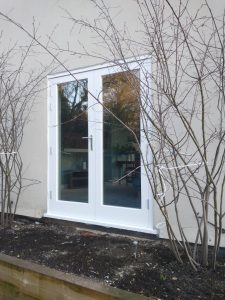
A few years ago, we carried out work at a property on Tyrwhitt Road. The project involved two main tasks: reducing the size of an existing opening to accommodate a new sash window and installing a new set of French doors.
This is a good example of why “opening changes” are rarely one-size-fits-all: you can be dealing with two different types of work on the same project (reducing one opening, creating or enlarging another), each with different structural and approval implications.
The takeaway
If you’re changing an opening, assume it’s a planning-and-building-control conversation, not a quick “window swap.” Whether you’re weighing up changing window size planning permission, asking can you increase window size without applying for planning permission, or trying to confirm if you need planning permission to enlarge a window, the safest approach is to get clarity before you lock in designs, builders, or manufacturing – because once the wall line and structure are involved, reversing decisions gets expensive fast.
If you’d like, we can take a quick look at what you’re planning and tell you the most sensible route forward (including whether a planning application is likely, and what building control sign-off might involve). Get in touch with Wandsworth Sash Windows, and we’ll help you move ahead with confidence.