Glass
Handcrafted in Britain since 2012
Modern Glass Technology for Your Home
Most original timber sash windows in London would have had plate glass fitted. Plate glass was made through a process of casting molten glass between rollers to get it to the desired thickness. It was an inexact process and required lots of mechanical grinding and polishing after it was rolled. In 1952, float glass was invented in which the molten glass was floated onto a bath of molten tin which gave a much better quality finished product, and made glass much cheaper to produce. Float glass is still the dominant way that glass is made today.
Whilst float glass remains the basis for the glass we use in our windows, what is then done with that float glass before fitting it into windows has changed dramatically since its inception.
Double Glazing
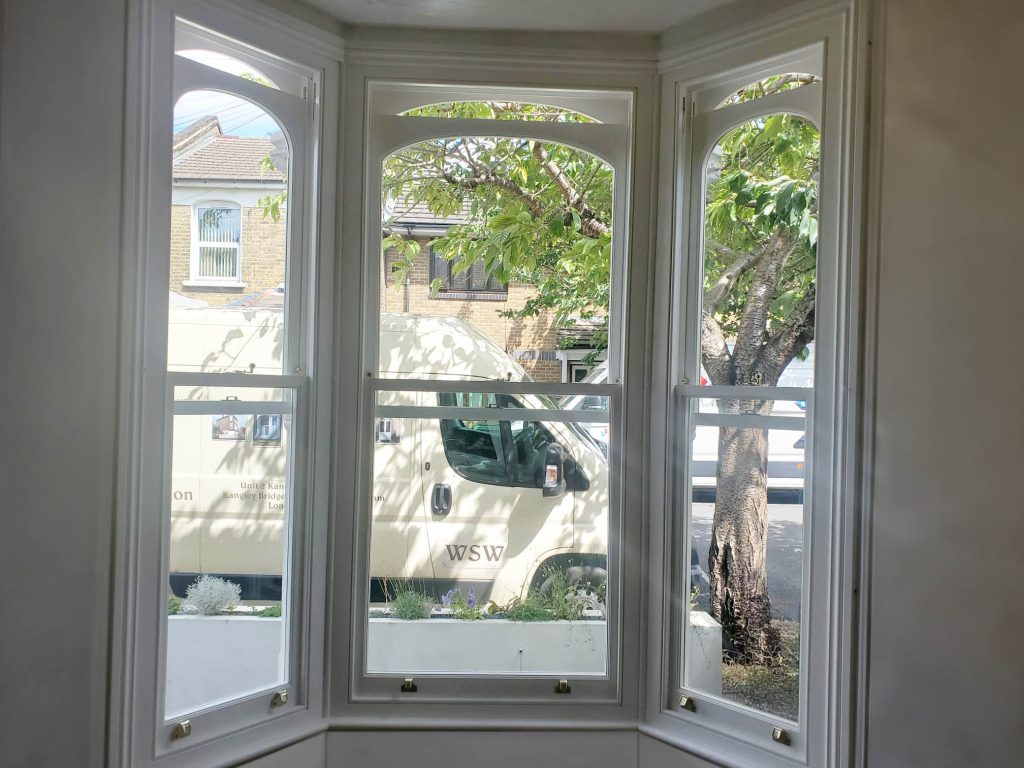
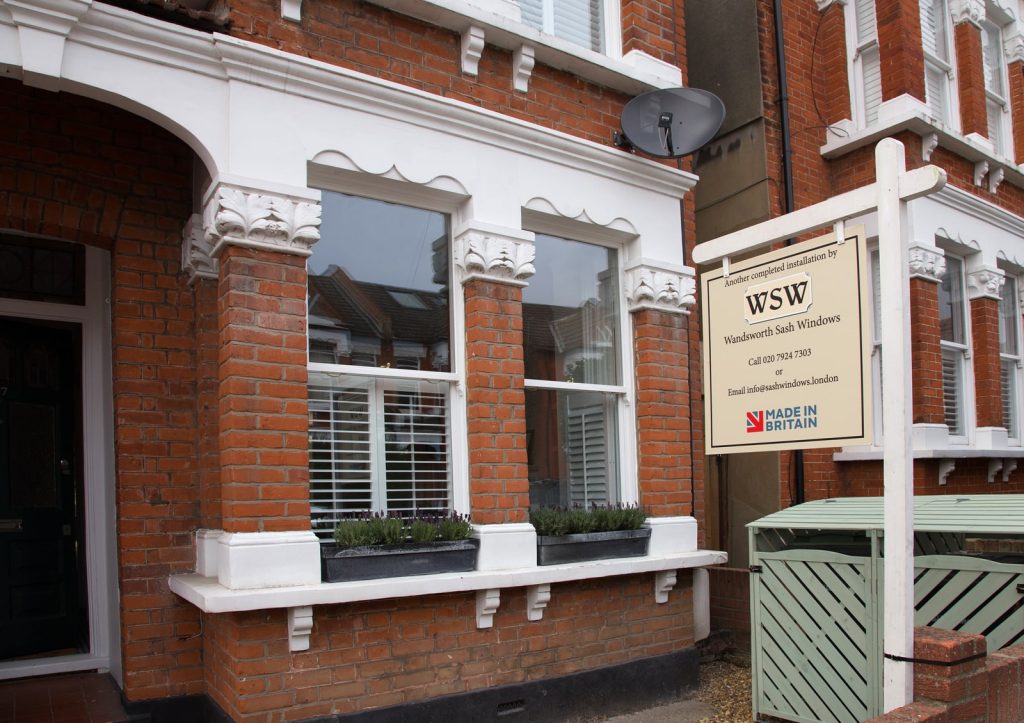
The majority of windows we manufacture and install in London have double glazing fitted. Whilst double glazing has been common in windows for decades, the quality and longevity of it has improved throughout that time. Our double glazed units are manufactured with toughened glass as standard. Toughened glass is made by cutting float glass to the required size and then heating it to around 620 degrees in a furnace, and then rapidly cooling it with air jets. This process creates a permanent tension which makes the glass up to five times stronger than non-toughened (annealed) glass. We use this as standard on all of our windows to ensure that the windows we fit into your home are always as safe and secure as possible.

Acoustic and Laminated Glass
Laminated glass is made by sandwiching together two sheets of float glass, with a PVB interlayer between them. This interlayer keeps the two panes together even when smashed or impacted. If impacted, the glass does not shatter into sharp pieces. And because the interlayer holds everything together, it remains in place — meaning an intruder still cannot gain access.
Acoustic glass is a form of laminated glass where the interlayer is made of a specific material that is designed to reflect noise back towards the source, and not allow as much noise to pass through. We have fitted lots of windows with acoustic glass in areas like Putney, which is under the Heathrow flight path, and in areas like New Cross where there are busy roads and bus stops.
For more information on acoustic glass or to get a quote for fitting new acoustic glass windows to your property, please contact us.
Vacuum Insulated Glass – Width of single glazing, warmth of triple glazing
Vacuum insulated glass has been commercially available for around 30 years, but the technology behind it has developed significantly in the last 10 years and has become a readily available and widely used product.
Vacuum insulated glass works in a similar way to double glazing, where there are two sheets of glass put together with a cavity between them. With double glazing, that cavity is then filled with a noble gas (usually argon) to reduce the amount of heat transfer from one side to the other. With vacuum insulated glazing, the air between the two panes is extracted creating a vacuum. This means it is very difficult for heat to transfer from one side to the other, making the glass incredibly good at insulating your property. It also means that the cavity between the two panes is very slim, less than 1mm, and the vacuum insulated glass performs as well as a triple glazed unit.
For more information on vacuum insulated glass, please click below.

Stained Glass
One of the most stunning features of some period properties in London is stained, leaded or coloured glass. Whether it is stained glass panels in a front door like this property on Green Lane in Chislehurst, leaded textured glass in casement windows like this property on Kings Hall Road in Beckenham, or striking sash windows with a Bowood top sash design and stained glass like this property on Ritherdon Road in Tooting, we can help bring your windows and doors back to life with modern double glazing, whilst retaining the existing or manufacturing new encapsulated stained glass.
We work closely with stained glass experts who can deglaze, repair and encapsulate these types of glass into the centre of a new, toughened double glazed unit. We have worked on 48 projects in the past two years in London where encapsulated stained glass was included in new windows or doors, so we are the specialists in stained glass windows for London properties.
For more information on this, please click below to visit our stained glass page.
Frequently Asked Questions
One of the most important considerations in these designs is the longevity of the products. We understand that replacing your windows is a costly endeavour and our customers would not want to be replacing the same window every 10 years. We also take traditional designs & styles into account when manufacturing windows & doors, trying
to ensure replacement windows are as sympathetic to traditional styles as possible. Some parts of your new windows may not be the same as your original. This is because we need to combine all of these considerations to ensure we provide the highest quality window, which is exactly what we do.
All the sash windows and other windows and doors that we supply are fully compliant with Document L Building Regulations. New sash windows, casement windows or doors that fit into existing frames are not required to comply with regulations as such work does not affect the structure of a building. Listed buildings and conservation area properties may be exempt from regulations – your local planning authority will be able to advise you if you are unsure.
There are a few key factors when deciding whether to repair or replace your sash windows. Firstly, the condition of the existing frame and sashes is most important. If the timber is in a good condition and there is no rot, then draught proofing is a great option for you. However, if any of the timber has started to deteriorate, then it is often most economical to replace, whether that be just the sashes or the entire window. Another key factor to consider is how important insulation is to you.
Draught proofing a window will limit the cold air coming into your property, and overhauling it will ensure it moves more easily, however most heat loss is through the glass and with a repair, you will still be left with single glazing. If this is a big concern, then replacing sashes or the entire window for a double-glazed version would be best for you. Finally, cost is something to consider. A draught seal and overhaul costs around £400-£700 per window, replacement sashes cost £1,000-£1,600 per window, and a complete replacement costs £1,800-£2,500 per window, all excluding VAT.
We are members of and certified by FENSA, which allows us to self-certify our installations as compliant with building regulations.
As standard, our sash windows are fitted with a Hardwick hook lock and roller stops.